
Your trusted source for independent, high-quality, science-based advice
© 2025 Berryworld, All Rights Reserved

There have been cyclamen mite challenges at the strawberry fruit farms this spring. As such, it is an opportune time to review what we know about cyclamen mite control at both the nursery and fruit grower stages.
Cyclamen mite infestation causes thickened, puckered leaves and greatly reduced productivity
Cyclamen mite biology
These mites are microscopic, white/clear and shiny smooth. En masse they can be seen with a 10x lens if there are heaps of them all together, but confirmation requires a microscope. They feed in dark, protected areas of the plant, such as deep in the strawberry crown and in the young leaves before they have unfolded. By the time evidence of their feeding is visible on leaves that have expanded as hardened and crinkly, the mites themselves are not on the leaf surface; they have moved back down to the protected crown. They will also feed on developing flower trusses, causing flowers to wither and die, and developing fruit to be russetted.
Their eggs are huge for the size of the insect, around half the size of the adult. A female can lay almost 100 eggs when feeding on strawberries, and most of those offspring turn out female. In moderate temperatures, (15-18°C) egg hatch alone can take two weeks, but is quicker in warmer temperatures. In summer, development through the juvenile phase to adulthood takes another two weeks.
See the cyclamen mite fact sheet for photos and more information.
Where do cyclamen mites come from?
Cyclamen mites can infest cyclamen, obviously, but another 300ish common plants can host them as well, including pigweed, galinsoga, violets, ivy, daisies, plantain, and unfortunately, strawberries. In New Zealand’s mild climate, we expect them to be present in the environments surrounding strawberry fields.
Thankfully, they are not highly mobile. They don’t fly and don’t like sun and dry air, so they are moved into strawberry fields hitching rides on pickers, equipment, birds and insects. Obviously if they were present in the nursery stock, that’s the most significant source of infestation.
Combining the fact that the pests themselves are almost invisible and there is a considerable lag time (which is variable dependent on temperature) from first mite colonization to symptoms being visible, and we have a situation where both nurserymen and strawberry fruit growers are struggling to manage a pest that they can’t see until there are high numbers established. And by the time high numbers are established, they’re super difficult to control!
Strategies for Management
Chemical is not 100%: Various miticides are used to control cyclamen mite, but none totally eliminate the population in strawberry plants. Fenproximate (Fenamite), abamectin (Avid), spiromesifen (Oberon) and spirotetramat (Movento) all do an ok job of killing cyclamen mites and are translaminar (enter the leaf), but the main challenge is reaching the critters when they’re tucked up in the plant crown. Wetters and high volumes of water are recommended, as are night time applications, as slower drying time facilitates better plant uptake of translaminar materials. In addition, only abamectin is permitted during the fruiting period. Many fruiting growers either dip plants before planting or come back with a “sprench” after plants are established.
Biological insecticide could be useful: Beauvaria bassiana is a fungal pathogen that attacks insects. It thrives in warm (24-30°C), humid (75-85%) conditions. This matches the late summer field conditions at propagators’ fields pretty well, though would not match the winter conditions of the fruiting fields soon after planting. In a 2023 NZ trial done on cyclamen mite in strawberries, B. bassiana actually performed quite well. Note that this biological is a fungus, and is therefore incompatible with some fungicides, namely Switch and Captan. Compatibility with Teldor is good, while sulfur reduces efficacy of the fungal pathogen by about half.
Heat treatment is the gold standard: The only 100% control measure for cyclamen mite within plant tissue is heat treatment. There are various regimes of duration and water temperature; in the Foundation Stock we use 10 minutes at 46°C, followed immediately by a cold water bath and then planting. The trick is the accuracy of the time and temperature, because too hot or too long damages plants. This is easier to achieve in a water bath situation with bare root plants, and harder with plug plants. Purpose-built equipment such as a “Plant Sauna” can be used to heat treat without a water bath. Propagators should all be either heat-treating their motherstock or starting propagation with tissue culture motherplants.
Cyclamen mites close to home:
We grow one of the NZBP variety trials in Lincoln, receiving plants in late May. Just this week we found the first indication of cyclamen mites on one plant.
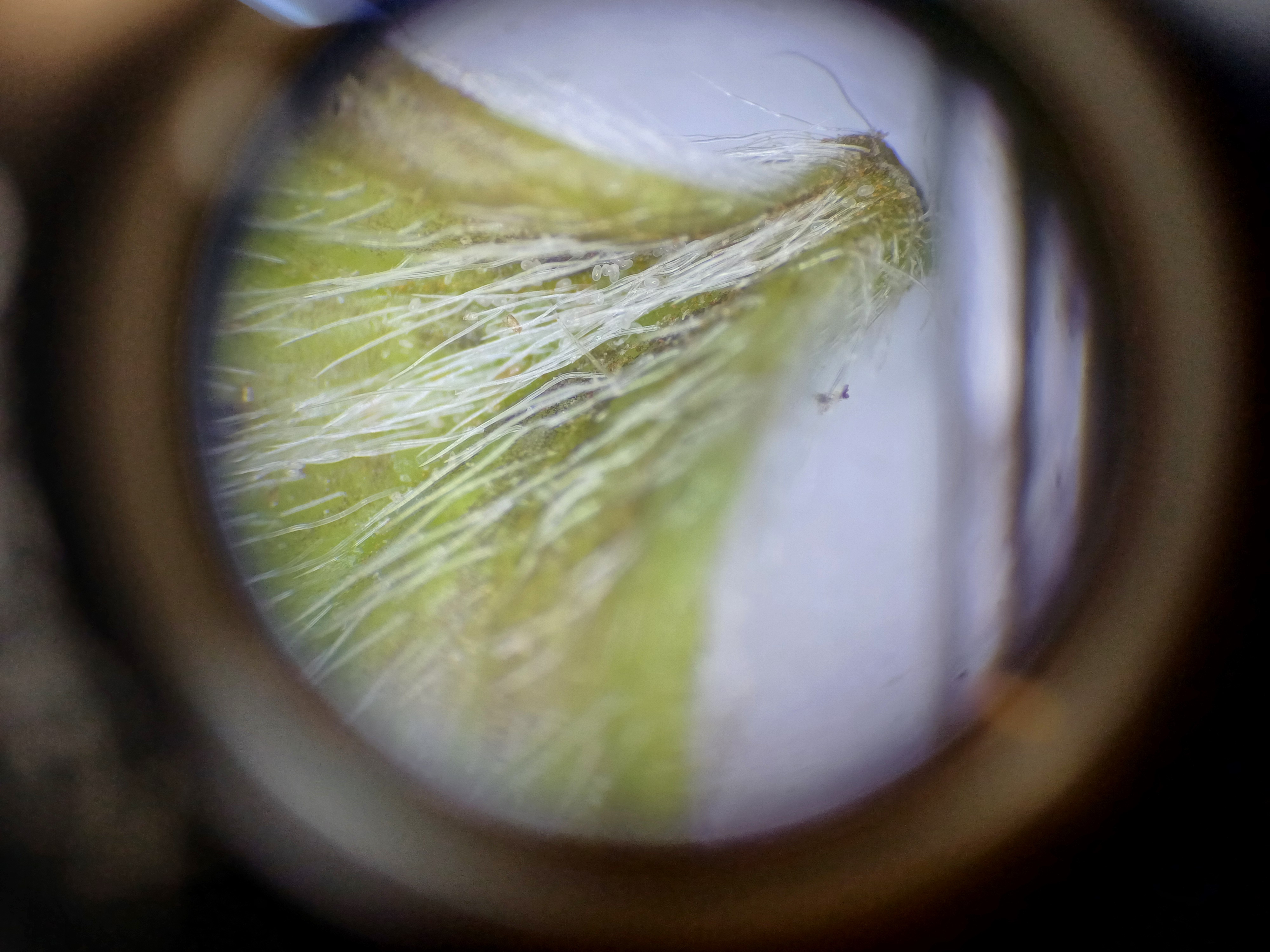
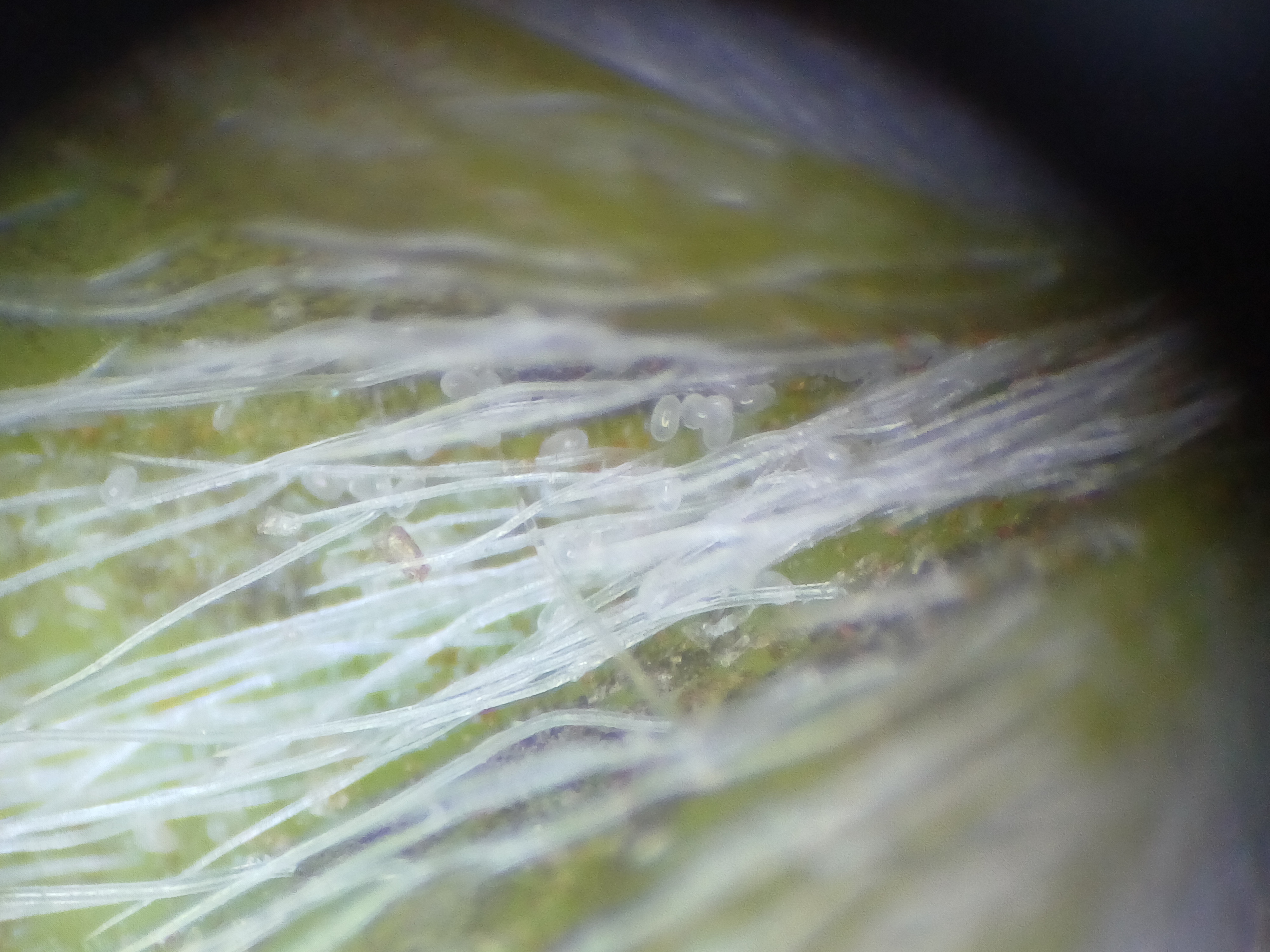
In high numbers, cyclamen mites look like grains of salt among the veins of folded baby leaves. Photo at right shows eggs tucked among plant hairs.

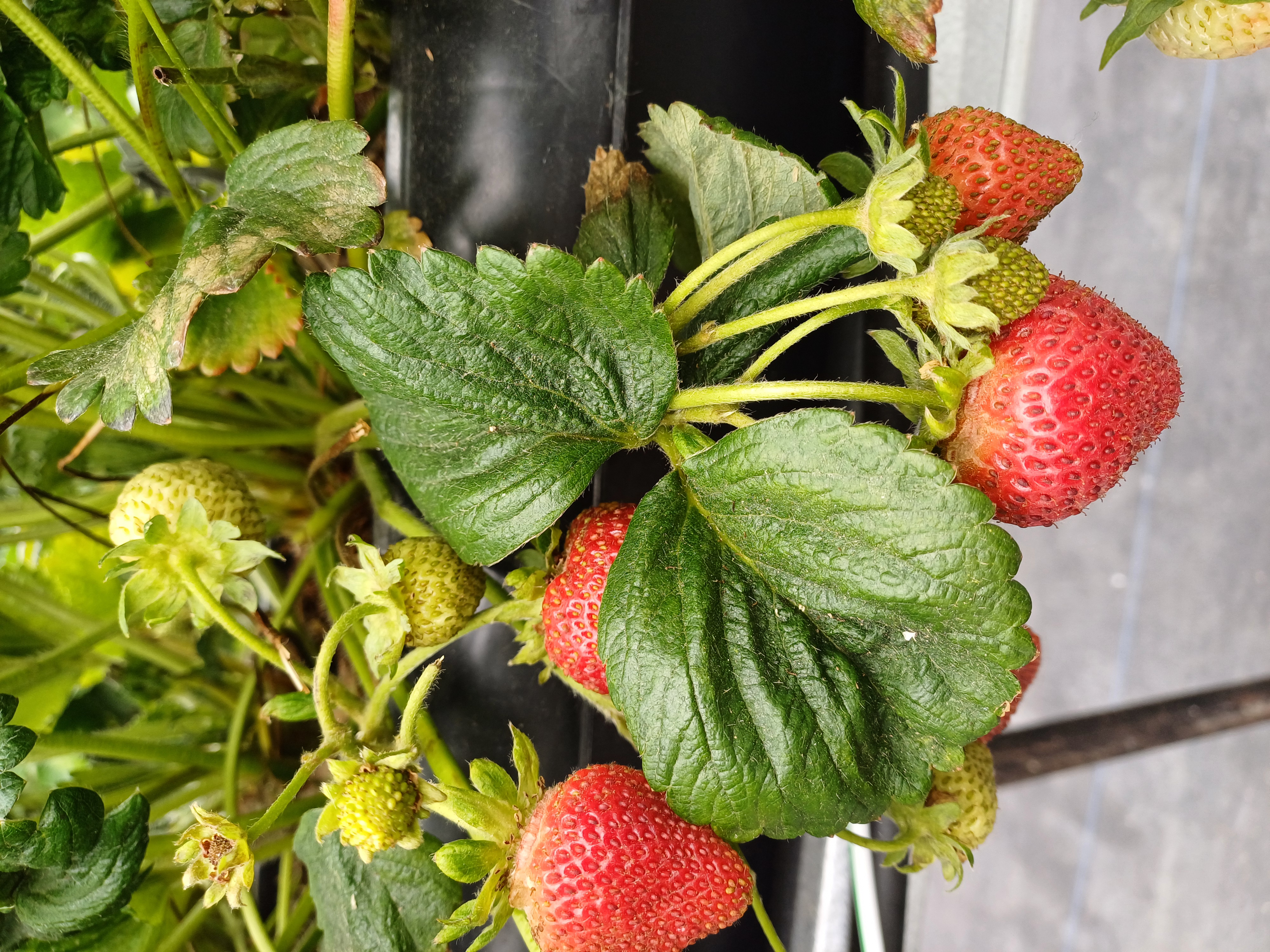
Cyclamen mite feeding in developing fruit causes roughened bronzing, often with prominent seeds.
We’ve been growing these plants for 6 months, and if they had come from the nursery with cyclamen mites, I’d expect to have seen symptoms long before now. Given that we’re growing in a tunnel with bird exclusion, I’m guessing we have some cyclamen mites “in the wild,” in areas surrounding the tunnel, and that it hitched a ride with an insect. [Subsequently, we decided that the mites probably did come with the plants, at low levels which take a long time to build up to causing visible damage.]
The decision I must make now is what to do about it. We’re hoping to have another 5 months of fruiting from this trial.
When I put the leaves under the microscope, I was surprised to see cucumeris predatory mites among the cyclamen mites. I had released cucumeris before Christmas, for thrips. The cucumeris appeared to be eating cyclamen mite. While I wouldn’t be trying to combat a major infestation of cyclamen mites with cucumeris, I’m interested to see if this “standing army” can limit the spread of cyclamen mite over the next 5 months.