
Your trusted source for independent, high-quality, science-based advice
© 2025 Berryworld, All Rights Reserved

Cyclamen mite: practical experience from this season
As many of you will be aware, cyclamen mite has again been a problem in plants from one of the strawberry propagators.
While this is unacceptable and needs to be cleaned up at the propagator level, it has also provided a test for some of the management techniques discussed in our 30th April cyclamen mite webinar with Delphy.
Notes from that meeting are attached, and the video link is at: https://youtu.be/fZjG8hzUHB0
The Story Thus Far:
· One of the Auckland strawberry growers dipped their plants before planting, as a precaution because they had gotten cyclamen mite in their plants the season before. They chose Pyromite (fenpyproximate) because it was rated as reasonably effective in the European experience. Since we don’t have an MRL set on strawberries in NZ, it can’t be used during the fruiting season, but can be used pre-flower.
· Symptoms of cyclamen mite (stunted, distorted leaves) were first noticed by the grower in July. The Pyromite dip appears to not have worked, or at least not well enough. The plants were kept in bundles during the dip, which could have impacted coverage. Fenpyroximate is not systemic or translaminar, so getting the product into the crown where the mites reside is likely the limiting factor.
· In late August, a heavy application of abamectin + wetter was applied (a “sprench,” meaning high volume with the aim to get the product to trickle into the crown). This was chosen because it is rated as the most effective product by the Europeans, and it was judged that the cyclamen mite population was too high to be suppressed by predatory mites at that stage.
· After the first application, plants were sent for microscopic examination. While some cyclamen mites were dead, many were still alive, particularly in the unopened flowers.
· A second abamectin + wetter was applied in early September.
· After this second application, cyclamen mites under microscopic examination were mostly dead, including in the flowers.
· It’s unclear why the second Avid application worked but the first one didn’t. Abamectin can move into plant leaves while the leaf surface is wet with spray, so it works better to spray in the evening, which could be one of the reasons for the variable outcome between the sprays.
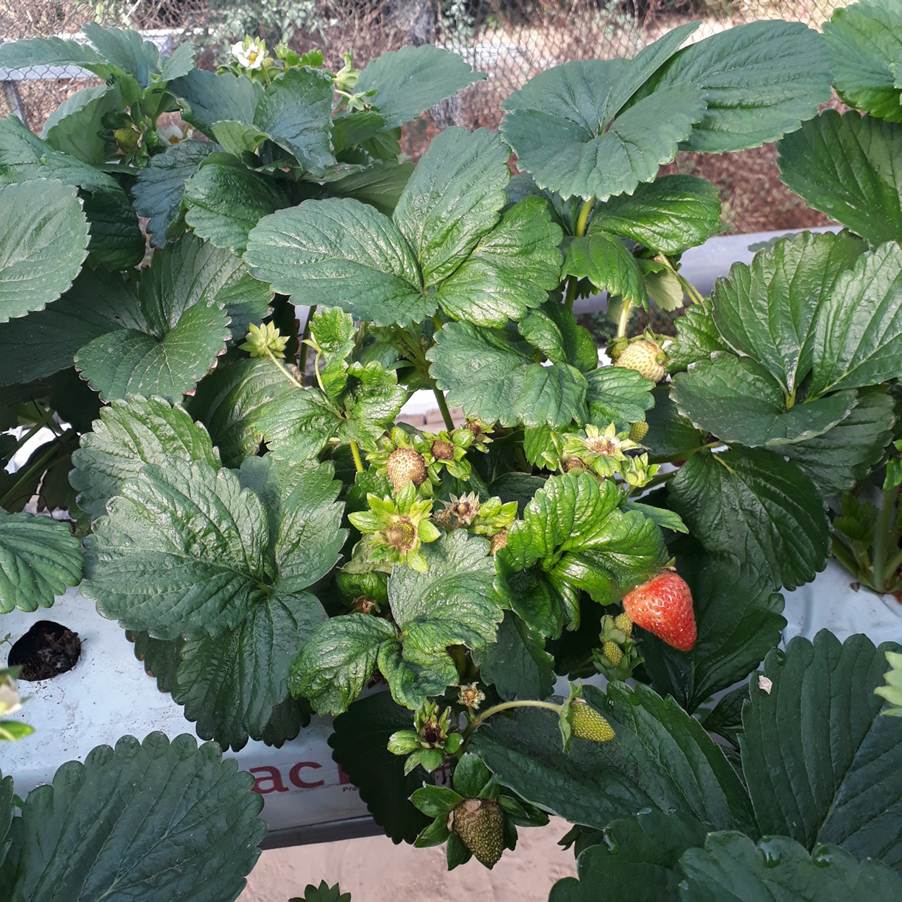
· By mid-October, plants in the field were growing new healthy leaves above the damaged ones, and appear to be recovering. Plants are still small—the impact of the earlier damage has set the plants back.
· Microscopic examination showed that the cyclamen mite population is now very low, but not zero. It will continue to be a management challenge as the season progresses.
The Plan from Here:
The farm has decided to release predators (cucumeris, or ‘Mite A’) with the aim of keeping that cyclamen population below the damage threshold.
In short, abamectin + wetter (an organosilicon) worked after the second application. Coverage is still a big challenge, and follow up with predators is going to be necessary.
On the propagation side, the propagator in question is doing more cyclamen mite control measures, including heat treating the motherstock. NZ Berryfruit Propagators is developing a nursery assay with the aim to detect low levels of cyclamen mite in nursery material prior to delivery to fruit growers.
We will watch with interest how the season progresses at the Auckland fruit farm.