
Your trusted source for independent, high-quality, science-based advice
© 2025 Berryworld, All Rights Reserved

Last year was the first time we grew the Lincoln strawberry variety trial under cover, and I was keen to try and attract some good bugs into that otherwise somewhat bleak environment of landscape fabric, plastic and metal.
We planted in spring, and I didn’t have a lot of time to research what flowers to grow to provide nectar for predators like lacewings, hoverflies, and lady beetles, as well as an draw for pollinating insects. The juveniles of all these are generalist predators, which I hoped would be helpful with spider mites as well as aphid control. I ended up just choosing the classic alyssum and marigold combination, which grew very well in the tabletop bins between the strawberries.
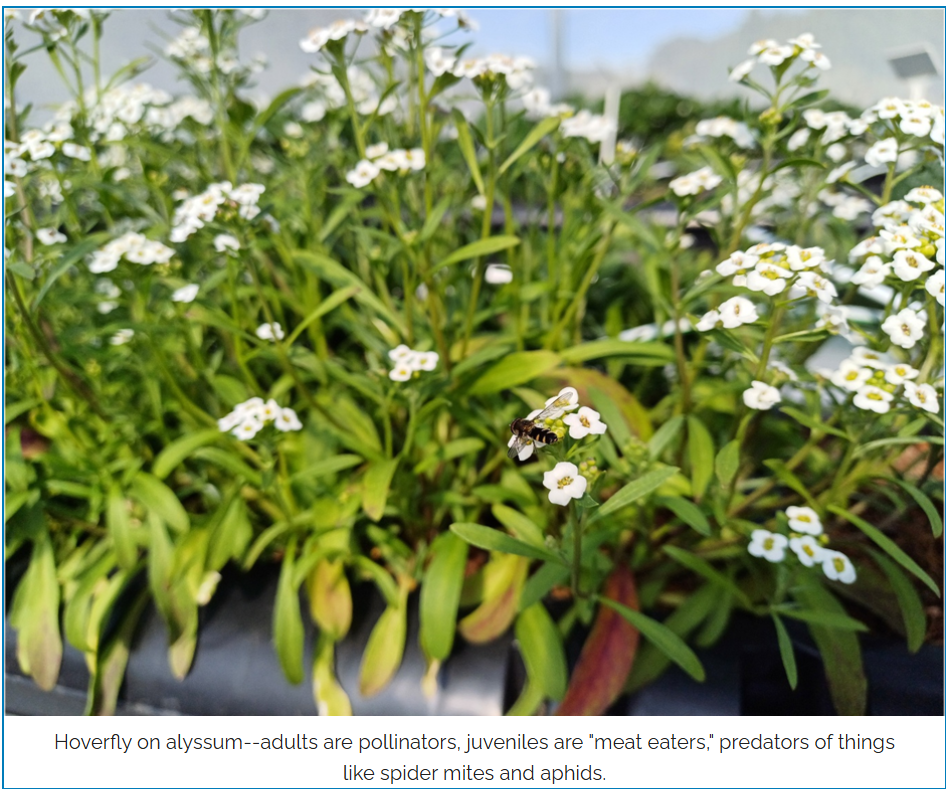
The strategy worked reasonably well, in that I didn’t have trouble with aphids after a single early treatment in September. However, Geoff was annoyed at the alyssum obstructing the harvest pathway and dropping white petals on his jersey! I saw good bugs in the flowers, and was happy until February when I realized that mirid bugs LOVE alyssum. Mirid nymphs were all over the alyssum for some weeks before they started turning up in the strawberries.
Next year I plan to use the alyssum as a trap crop to lure the mirids away from the strawberries, where I’ll either vacuum or spray them (haven’t decided yet). See Mirid Bug Update.
Lighter Touch has supported work along with Vegetable Growers NZ about planting annual flowering strips alongside vegetable crops with the idea of drawing in the good bugs that can help control the bad ones. Perennial flowers can help too: the demonstration project on spring lettuce in Pukekohe showed that the crop near the flowers required fewer insecticide sprays than the comparison block.
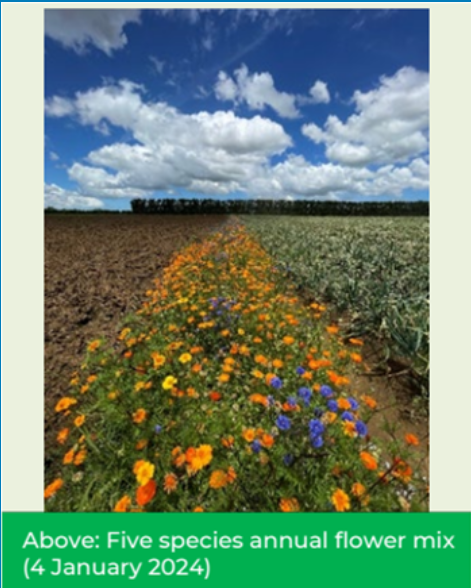
This concept would be applicable to in-soil strawberry growers as well as tunnel growers with a bit of space outside in which to plant.
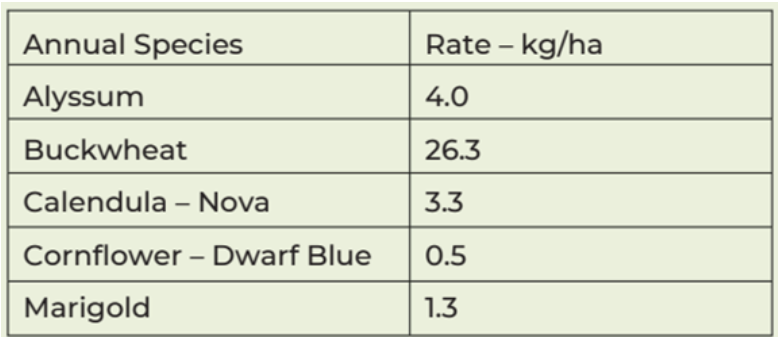
If you're interested in encouraging the good bugs but don't know where to start, consider the basic seed recipe used by the Pukekohe project.
If you intend to continue strawberry harvest in the later part of the summer, you might want to separate out the alyssum in a row by itself so you have the option of spraying it as a trap crop for mirids. Shake some plants onto a white cloth in late Jan/Feb to see if the little green nymphs are present, then plan on controlling them (spray or vacuum) before they turn into highly mobile adults with wings.
Just as with any seed-sown crop, good soil moisture and excellent seed-to-soil contact is important to get a good stand. Preparing the soil early to allow for a stale seed bed step (let weeds germ and then kill them with tilling or non-residual herbicide) is helpful. Cover the seeds so birds don’t eat them.
Common pitfalls to avoid: (from How to guide to Annual Flower Strips)