
Your trusted source for independent, high-quality, science-based advice
© 2025 Berryworld, All Rights Reserved

We are finished harvesting our variety trial this season, but we get a few nice berries still for our own enjoyment.
A couple weeks ago as I was casually picking a few fruit I noticed a katydid on the foliage. A member of the grasshopper family, they’re big (4 cm long from head to tail, as an adult) and leaf-green, and beautiful, in my opinion. I captured it and let it go outside my tunnel.
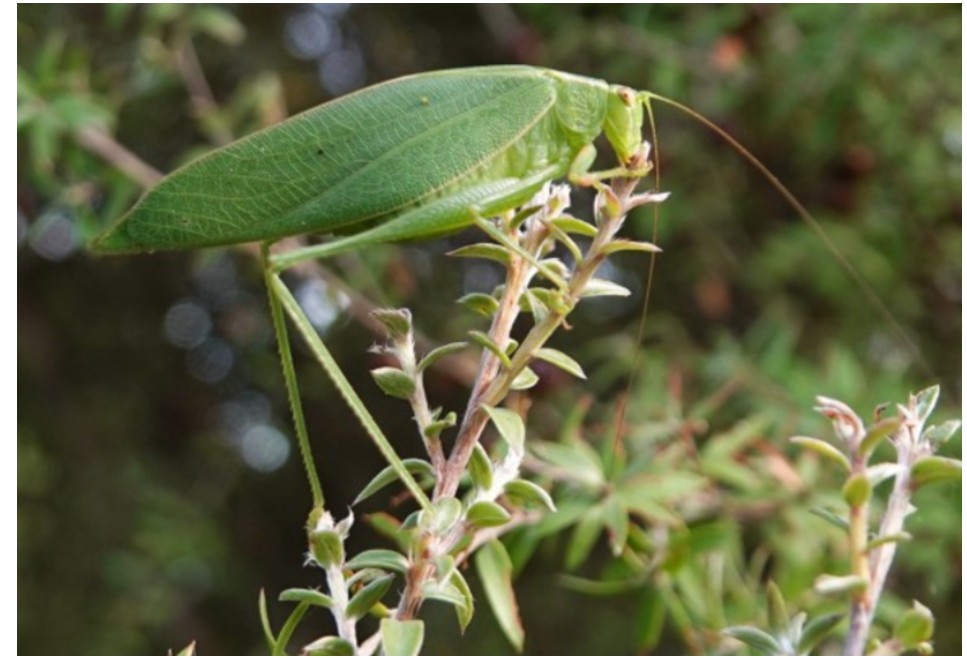
It wasn’t until a couple weeks later, looking more closely at the flower and green fruit damage, that the other shoe dropped. That katydid was causing a huge amount of damage to my strawberries!

Many of my flowers and developing green fruit had big corky splotches on them, where that katydid had been feeding. To quote University of California: “Katydid nymphs tend to take one bite out of a fruit before moving on to another feeding site. Hence, a few katydids may damage a large number of fruit in a short time. Feeding wounds heal over and enlarge into corky patches as the fruit expands.”
Earlier in the season we had had significant caterpillar damage from leaf roller caterpillars (light brown apple moth), and I had assumed that the autumn fruit damage was also from caterpillars. But upon closer observation, it was different in several ways:
1. Leafroller caterpillars leave behind “frass,” or sawdust-like brown poop, as well as white silk. There was none of that in the katydid feeding damage.
2. Caterpillars have a tendency to tunnel, whereas the katydid damage was just a big bite out of the tip.
Looking up katydids on the University of California IPM website, I was surprised to see that they have several chemicals labelled for katydid control that we can use as well, among them spinetoram (Sparta) and spinosad (Entrust). I don’t have first hand experience with the efficacy of either of these, but I would imagine that the large adults are hard to kill while young nymphs are not as resilient.
One thing I do know, next time I encounter one on my plants, I will not be releasing it to the wild with my blessings.