
Your trusted source for independent, high-quality, science-based advice
© 2025 Berryworld, All Rights Reserved

Scouting Methodology
This was the third season of insect scouting sponsored by BCNZ in select blocks across Canterbury. Scouting was done by Pete McNaughton from Fruitfed seven times on 9 Canterbury blackcurrant farms over the season from late October to mid-March. The same blocks were used as in the 2023/24 and 2024/25 seasons, middle aged Ben Ards, except for one switch at Ashburton. Scouting looked at aphid, spider mite and scale numbers, the severity of plant damage caused by aphids and by spider mites, and the numbers of several key beneficial insects.
Scouting was done by walking through a block and stopping at 8 random locations, and noting pests and beneficials found on 5 plants at each stop, for a total of 40 plants observed per block. Plant damage ratings were assigned as per rating scales outlined in the appendices.
Appendix 3 of the full project report (available from BCNZ) contains a chart detailing the 2025/26 spider mite scouting results.
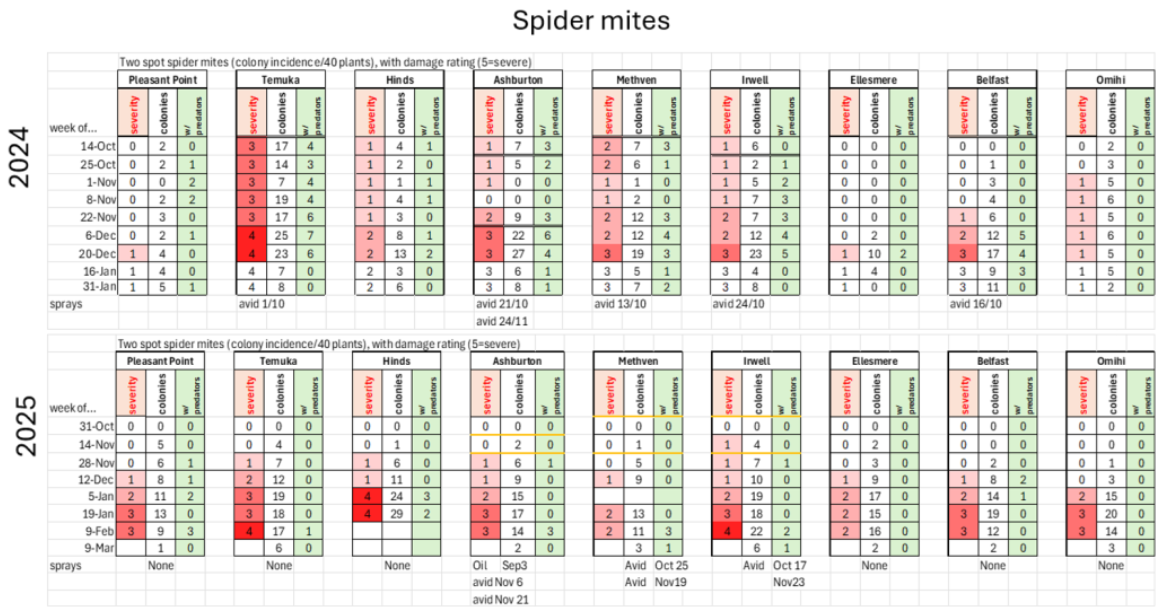
Spider mite predators turned up later than normal and with fewer numbers, possibly due to the cool and rainy summer weather. Damage levels peaked in Jan/Feb compared to in December the previous year.
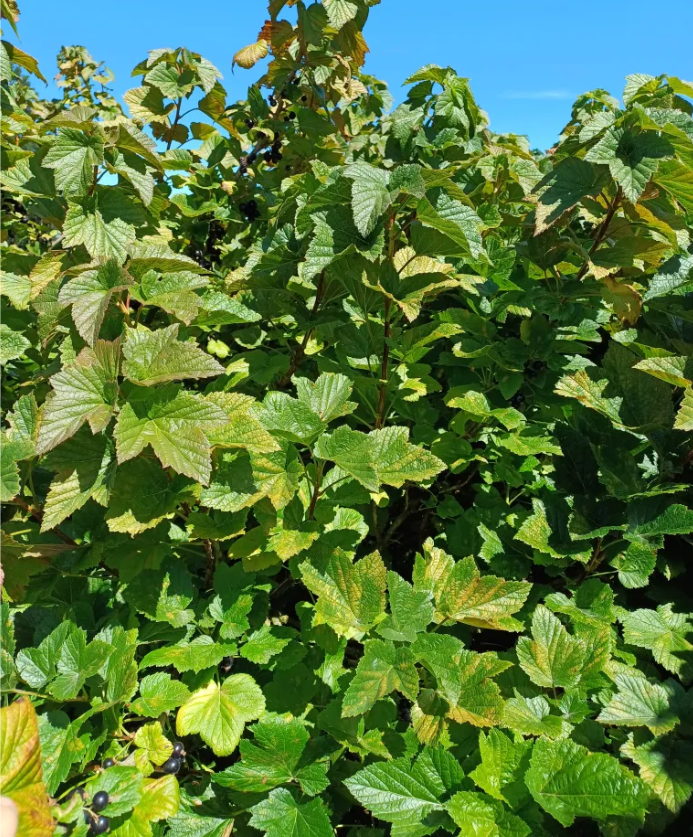
Only 3 of the 9 blocks were sprayed for spider mites. Those who did spray used two sprays each (abamectin), in October and November, well before the spider mite pressure peaked in early January. Spray timing for spider mites (highlighted on the scouting results table) is similar to that for aphids—growers are spraying well before the pest pressure peaks, and mite populations continue to grow and then decline seemingly regardless of spray applications. Damage is highly variable between blocks and between farms, and spider mite numbers eventually declined on their own.
We expect that in most years and on most blocks, sprays for spider mite control are not necessary. This is because predators usually control spider mites to a tolerable level. Occasionally spider mite pressure is early and control by supplementing predator numbers with released persimilis would be wise.
To pick up the blocks needing attention, scouting needs to be quicker than the methodology currently used by PGG. Scouting should focus on November-February, and utilizing a quick plant damage rating along with % of colonies that contain predators.
Service providers like Fruitfed and Farmlands are keen to add value to their customers by checking blocks for pests. If supported properly, this could facilitate block-by-block real time pest control decisions and the development of a meaningful record of pest pressure over many more.
Recommendations: