
Your trusted source for independent, high-quality, science-based advice
© 2025 Berryworld, All Rights Reserved

We experience vastly different yields on blackcurrant blocks. Some of this variation is seasonal luck, of course. But another determinant, we believe, is the overall bush health….and the condition of the soil that underlies the bush health.
So, to be able to see what’s going on in that normally hidden soil realm, we’ve decided to “soil our undies!”
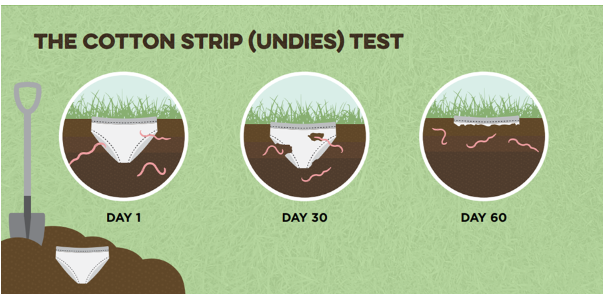
Alright, it may be a little tongue-in-cheek, but why not have a little fun with a soil health demonstration? And capitalize on the resources already available from other industries, to boot.
What we’re doing is using the appetite of soil microbes as they rot cotton as a measure of soil activity. Generally speaking, soils with more active “bugs” have better structure, because it’s the gums and goos that the microbes spit out as they’re eating that glue fine soil particles together and make it crumbly. Crumbly soil tends to have both better oxygen levels for roots and ironically better water holding capacity. Think of it like a sponge holding both air and water.
Growers who attended the BCNZ meeting in Lincoln in July will have taken home a couple pairs of cotton undies for this demonstration. I’ve used pieces of an old cotton tee shirt, since I had one on hand. We “planted” our cotton bits last Friday about 15 cm deep in several spots in and around our blackcurrant gall mite block. We’ll see if the soil in the old blackcurrant block is better or worse (more or less active) than the one in the flax collection.
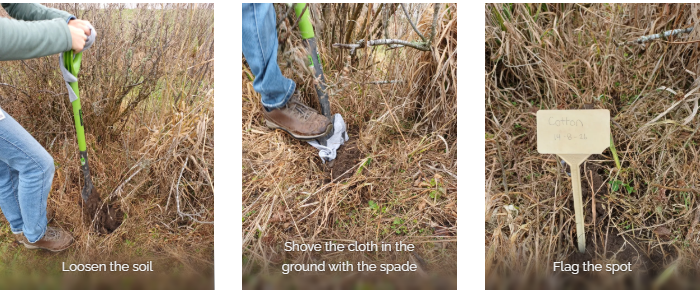
Pick two spots around your farm that you think might have different soil health, and plant your “demonstration undies” in the soil. Make note of the soil moisture, and don’t forget to mark the spot with a label. For the industry field day in November, I’ll ask you to dig them up to bring along for show and tell, and count the number of earthworms you see in the process. We’ll do the same.