
Your trusted source for independent, high-quality, science-based advice
© 2025 Berryworld, All Rights Reserved

One of the delights of working with berries is looking at them closely under the microscope. If you peel back the bud scales and surrounding leaves of blackcurrant buds right now, you can see the beautiful little flowers in miniature, formed and (almost) ready to go. They are in “endodormancy,” meaning there are internal plant chemicals keeping those buds from growing, even during the warm days we can sometimes get in winter. Winter chill is required to break that dormancy.
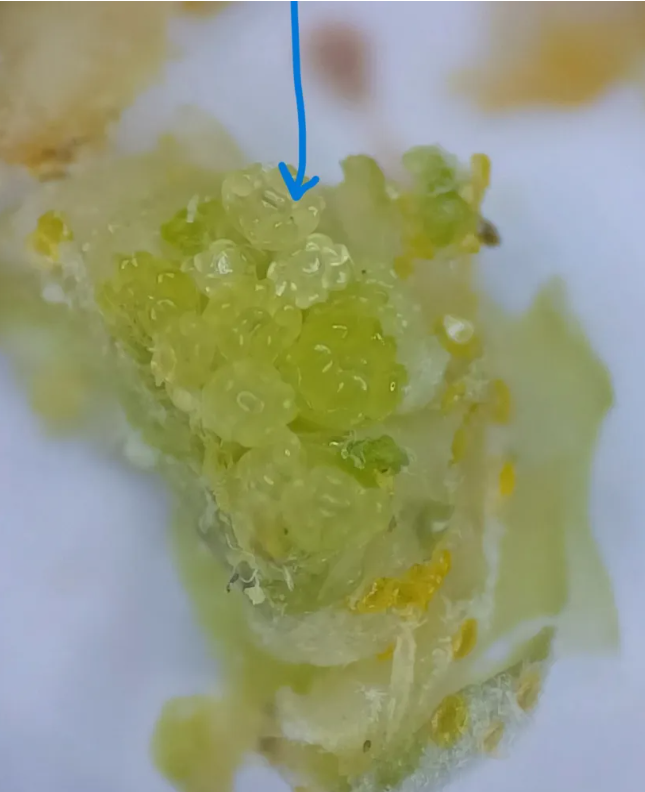
The buds on our breeding stock that were grown out in our new strawberry tunnel last summer are gigantic (see details below), while the buds on motherstock grown in the shade house are a bit smaller. This got us thinking about bud size, and about the research from several years ago where Murray Craighead found a correlation between winter bud diameter and productivity the following season.
Murray Craighead's 2015 report "Best Practices Protocols to Improve Profitability and Sustainability in Blackcurrant Production" lists good bud diameters, measured in July, as:

We dug out our callipers and measured some Ben Ard we had handy. Below are averages of 10 bud diameters of each set of plants.

If we apply the lesson from Murray’s research, we’d expect the biggest buds (young plants grown in a sunny environment) to have the most production potential next year. Bigger is better, if you’re a blackcurrant bud. Plants grown without any light or nutrient limitation (in the tunnel with the strawberries) grew bigger buds. These were also young plants, which tend to be more vigorous.
When you’re looking at buds under the microscope, there is a white spongy textured material just underneath the flowers. I’ve been wondering if that’s the plant’s starch reserves that will power the flower growth in the spring.
Iodine stains starch blue/black, so I borrowed some from a lab and stained a few buds. Sure enough there are big differences between starch reserves in the buds grown in different environments.
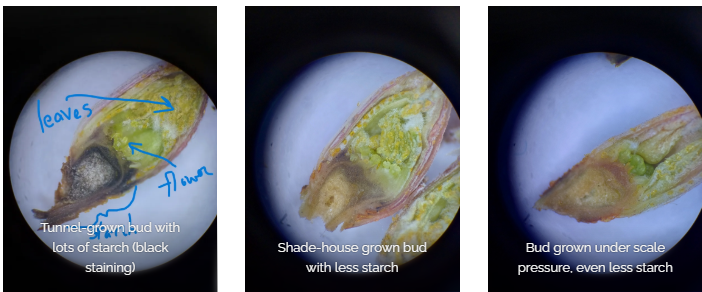
We’re thinking that the reason that big buds are more productive is partially because the greater starch reserves can power stronger spring growth. Maybe the flowers can withstand more days of adverse weather while waiting for pollination, or maybe they can support pollen tube growth better. The big buds also appear to have more flower initials in them, which would relate to the growing conditions and plant resources in late summer/early autumn, when those initials are forming.
The pictures highlight again how the post-harvest period is so critical to future yield.