
Your trusted source for independent, high-quality, science-based advice
© 2025 Berryworld, All Rights Reserved

One harvest in mid-December we had a lot of berries with white tips.
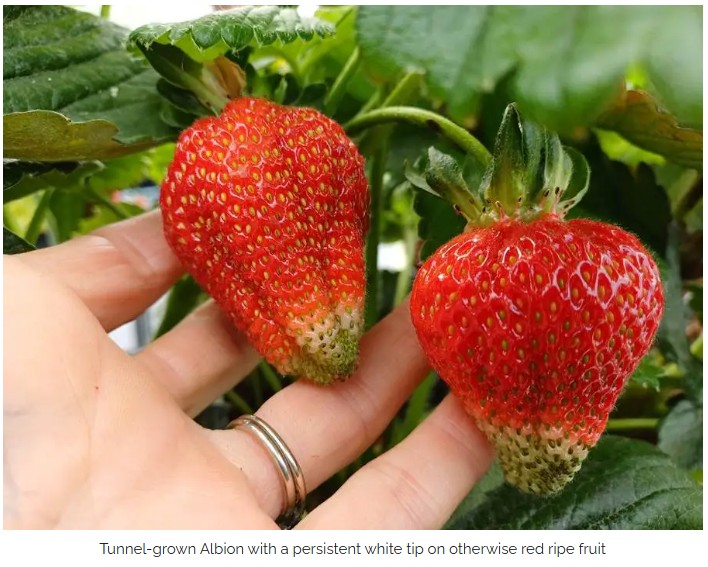
Around the same time, I had a query from two commercial strawberry grower at different ends of the country with the same question—what is causing that persistent white tip on otherwise beautiful berries?
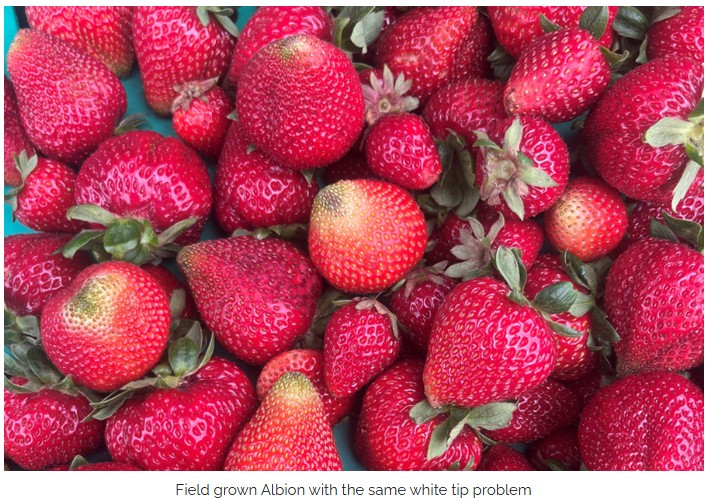
Our contact at the University of California said they see this particularly with Albion, and it’s caused by lack of pollination. We were seeing it in Albion too, as was one of the commercial growers. The other varieties with a bit of problem were Moxie and Valiant, and always the big king berries.
I admit I was skeptical about the lack of pollination theory, because the berries weren’t particularly “knobbly” at the tips like I usually think of with pollination problems, and it had been WINDY in the spring. Strawberries are mostly wind pollinated, so I would have thought pollen transfer would have worked fine.
However, when I put those seeds under the microscope and cut them open, sure enough, they were empty.
Under a dissecting scope it’s really easy to confirm whether an achene contains a pollinated seed. Empty, unpollinated seeds are hollow, with no endosperm. Good seeds are full of solid cream-coloured flesh, like a miniature almond.
Now the corollary question is: WHY was the pollination poor?
The tip end of the berry correlates to the tip end of the flower, which is furthest from the anthers. The female flower parts (pistils) on a strawberry flower mature over time, the lowest ones near the calyx first and the tip ones last.

In hot weather (>25°C, and especially >28°C), the more exposed stigmas at the tip can have trouble staying hydrated, and they can have a shorter useful life for accepting pollen. The window for pollination is also shortened by warm (18-20°C) nights which increases respiration, even before the flower is open. The pollination window for those seeds at the tip can be less than 24 hours under these conditions.
For us in Lincoln, the problem was only short lived—next harvest was fine.
I have revised my understanding that wind is good for pollination. I’m guessing now that all those dry hot Norwest windy days we had in spring didn’t actually help us in the pollination department, and in fact may have caused our white tip problem.