
Your trusted source for independent, high-quality, science-based advice
© 2025 Berryworld, All Rights Reserved

Geoff Langford
I have recently finished the summary of industry pesticide usage, and that led us to think about leafspot and what is used to control it. One of the products used for control of leafspot is azoxystrobin, which when used, almost always results in detectable residues in the fruit at harvest. It would be good if we didn’t have to use this one, but it is a very effective leaf spot control material. All the resulting residue results were compliant, but there is increasing market pressure regarding any pesticide residues, so we’re looking again at what we might not need.
A key question I have often wondered about is the economic impact of leafspot on blackcurrant yields. I have no doubt that susceptible varieties like Murchison, Magnus and Blackadder will have potential yields impacted by leaf spot. Anything that has a major impact on the photosynthetic performance of leaves is not good and I have seen total leaf fall caused by leafspot. The big question is whether other varieties that have levels of tolerance to leaf spot would have lower yields if they weren’t sprayed with fungicides. I would like to see that put to the test.
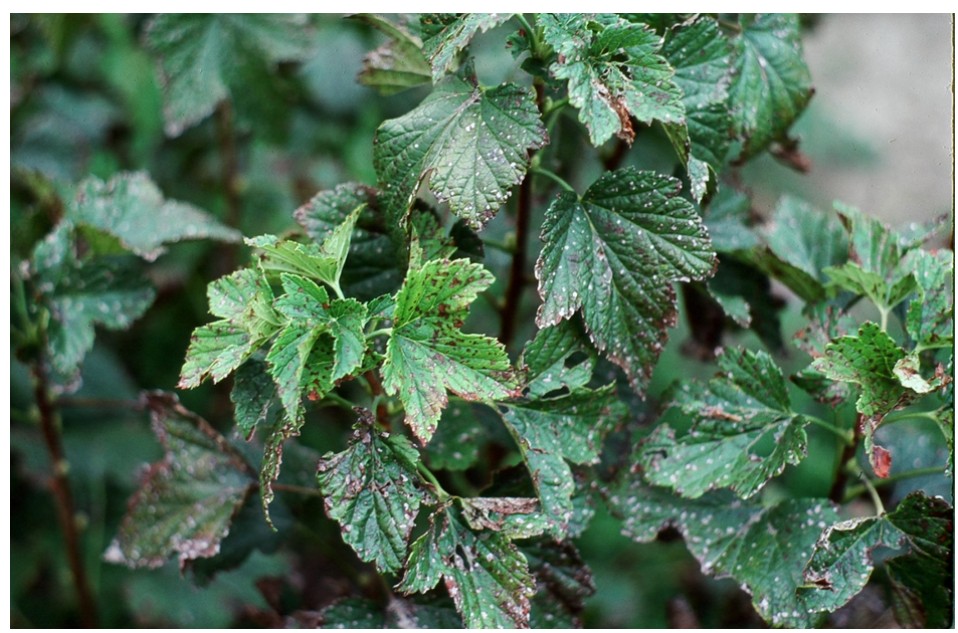
The other key question about leaf spot control is spray timing. I unearthed the classic paper by Mulholland and Beresford from 1989. This paper covered leafspot spore trapping in multiple sites and I quote direct from the paper: “ascospore release always began in late August or early September and declined to an undetectable level by mid November.” They further state “Fungicide protection should be maintained from the time leaves emerge until the grape stage of flower development.” Checking CurrantBase highlighted that the present strategy of growers is to focus early season protection on copper and thiram. When I was checking time of application in Currant Base, of the 130 block applications of Azoxystrobin, 11 applications of flusilazole and 235 block applications of penconazole, only 35 of these applications were made in September with the rest in October or even November.

I think we are getting our most active leaf spot applications on too late for greatest impact. One problem is that after infection, it is about 3 weeks before you see spots and I think that has contributed to the later than desirable applications.
So, it would be good to have a rethink about our leaf spot control strategy with more data about tolerance of varieties, especially Lewis, and a move to using the more effective leafspot control materials at peak spore release time in September.