
Your trusted source for independent, high-quality, science-based advice
© 2025 Berryworld, All Rights Reserved

We have summarized our present thinking about a pest and disease control strategy for Blackcurrants, taking into account the lessons from the past couple seasons.
Winter is rapidly drawing to a close. Thank goodness we get a down season while the plants are dormant—our only IPM task was a winter scale treatment. Hopefully all blocks with high numbers of crawlers are treated by now.
Reflecting on the scale issue with a couple growers this past week, there still seem to be plenty of crawlers about. Sergiy has noted how they are more prevalent low down in the plant where they get some shelter from weedy grasses (organic block).
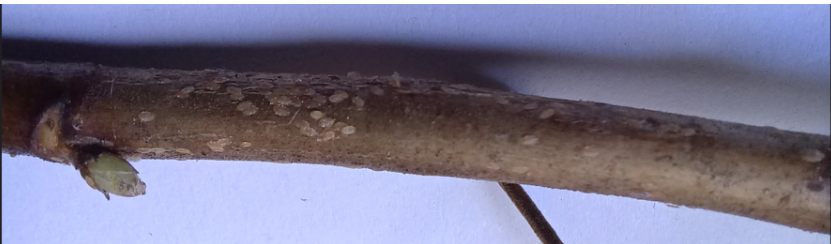
We haven’t got leaves on the plant, so we’re expecting to be able to get good coverage of the canes. The window for addressing these crawlers is rapidly closing—at some stage in September, they will turn into adults, with a protective shield covering the next generation.
Our two trusted tools for this time of year are oil and lime sulfur. I’d like to add buprofezin to that list, but last autumn’s Ovation efforts by Matamua farm didn’t seem to make much of a dint in the population, so our confidence there is a bit knocked. Thorough spray coverage is essential for any of these scale treatments to work.
We pulled out some notes on spraying oils from a conversation with John Thompson last year. Mineral oils are considered more effective than plant or fish oils for insect control by smothering. Examples would be DCtron, Stylet oil, Excel oil. He says these are already formulated with a surfactant, so an additional wetter would not be required. Spray coverage for these contact products is of course essential.
Puzzlingly, I checked on the unmanaged block we use for gall mite tracking, and it’s hard to find even one scale crawler. Yet something in many of the commercial blocks has led to a “scale bloom.”
We have several theories:
And there could be something else going on that we haven’t fathomed yet.
Next IPM task: Gall mite. It’s been a cold winter, so they may well be early to emerge this season. We’ll be looking closely after this southerly front passes