
Your trusted source for independent, high-quality, science-based advice
© 2025 Berryworld, All Rights Reserved

Tarsonemid mites have been problematic previously in Nelson, but this is the first time they’ve been found in Canterbury.
[Correction: first time this article was posted we called the tarsonemid mites Cecidophyopsis grossulariae. This was incorrect; the tarsonemid mite genus/species is currently being identified by MPI. C. grossulariae is gooseberry mite which is more like a gall mite]
Tarsonemid mites are tiny, not visible without a 20x lens or a microscope. They infest blackcurrant buds and at high numbers can kill many buds in a planting. It’s the damage from mite feeding rather than the mites themselves that growers should look for.
In the photos below, notice the missing buds on the Ben Rua bush, followed by an up-close showing that the leaves that do emerge are distorted. Oddly, where bud scales and leaves are missing, the dead flower primordia remain.
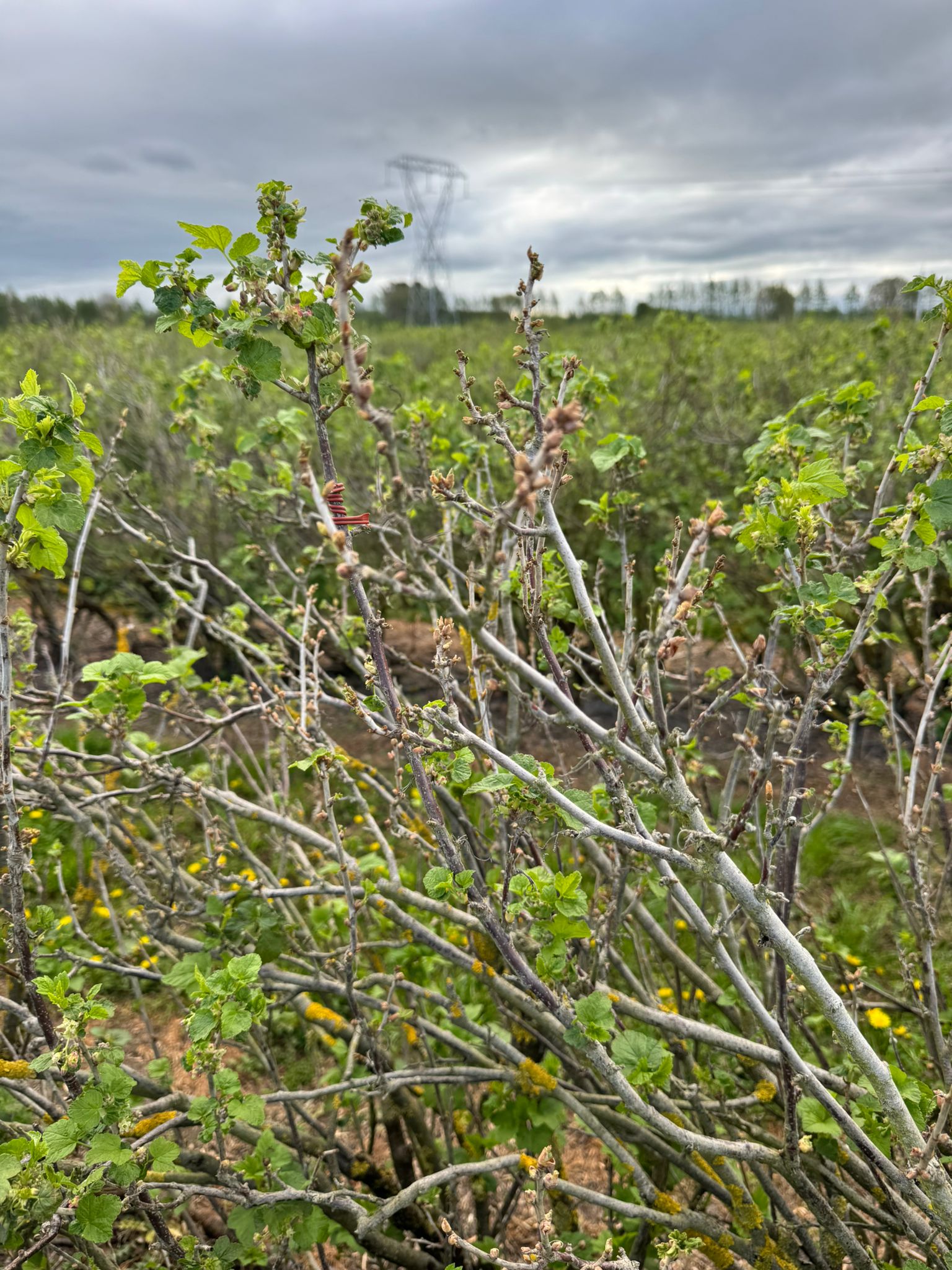
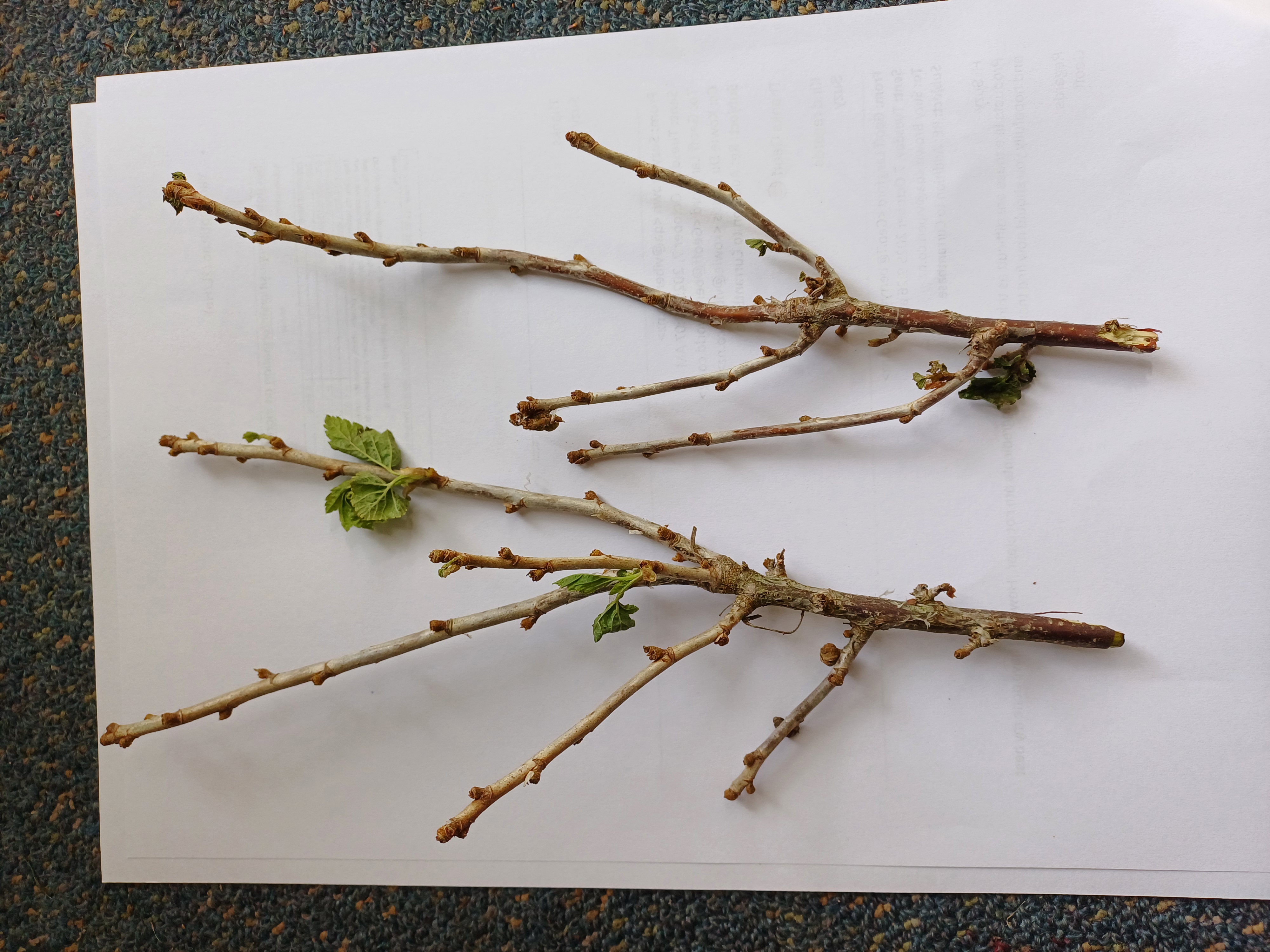
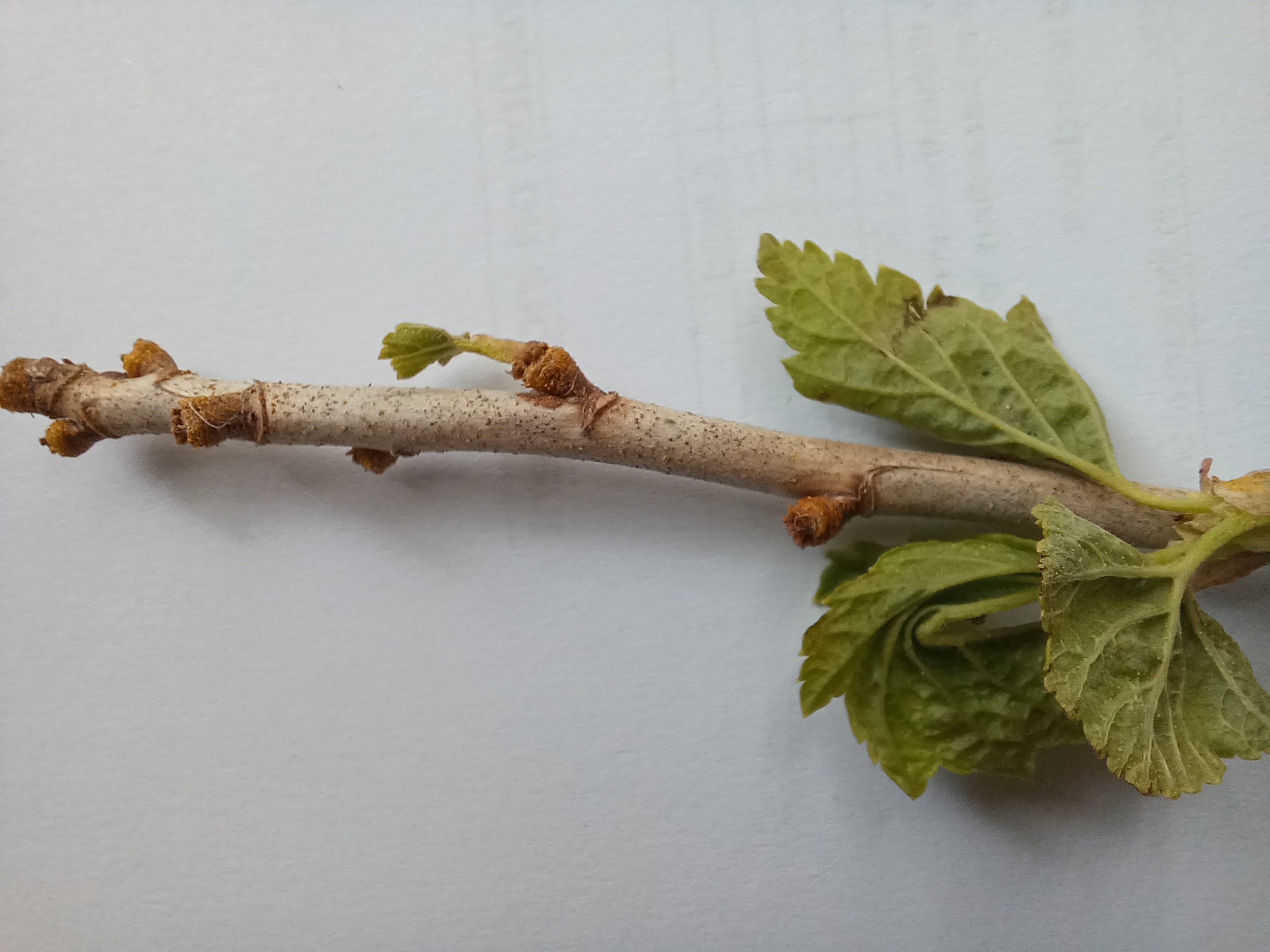

The description of damage from the Blackcurrant Manual is spot-on to what we’re seeing. Buds are ‘missing’ along the stem, where bud scales and leaves have fallen off but under the microscope the dead flower primordia can still be seen. Where leaves do grow from infested buds, they are distorted and thickened from mites feeding on them.
Blackcurrant Manual:
The adult mites are pinkish brown in colour, with males quite different in appearance to females. The females, which are more numerous than males, are elongate ovoid in shape, measuring some 0.1 mm to 0.2 mm in length and 0.05 mm in width. They are smooth in appearance, like minute beetles. The juvenile stages are translucent white to pink and very difficult to see. The eggs are bluntly ovoid in shape and clear.
During the autumn and early winter the active stages of this mite pest, mainly adults, invade the buds of currants and commence feeding at the base of the bud scales. This activity causes deterioration in the tissues of the buds and decay sets in. Eggs are produced, and several generations continue to be produced within the buds over the winter months. In particular, they are pests of currants that have a fairly open bud structure, such as the Ben Rua cultivar. With deterioration of the bud scales, the leaf primordia collapse and the flower primordia darken and dry out. The buds that are infested have little substance, and do not open if severely infected, but the dry flower parts remain intact and visible on the cane. As the buds dry out the active mites move out to infest other buds. Most of the infested buds do not open in spring but fall off. They break apart when handled, leaving the shrunken flower primordia behind.
In spring, when normal bud growth occurs in healthy buds, those that support lower populations of the tarsonemid mite tend to open in a distorted fashion, with small thickened leaves. The leaf stems (petioles) and shoot stems show shortening, with observable concentric thickened rings that are brown in colour. Flowers and fruit production are seriously reduced in infested buds and canes. Severely infested plants may produce very little crop.
The life cycle of the mite on currants is not well known, but it appears that in spring the dead and dying buds are vacated by the active mites that then persist during the summer/autumn months on the leaves and stems. On the leaves, the mites live within the angles of the veins along the mid-rib. Little is known of the life cycle on leaves, but several generations probably pass, before the buds are again invaded, by adults in autumn. Feeding damage is not very visible on leaves, except for thickening and browning of infested areas.
Control: Past control was achieved with Kelthane™ applied in the autumn prior to leaf fall, but this material is no longer available. The next best option is bifenthrin (Talstar®) that was reasonably effective in trials. For situations where this mite is a problem, a combination of Sulphur applied in early spring when the mites are on the move, combined with an autumn Talstar® application is suggested.
The Nelson growers have found that when a Ben Rua block is infested, it will need to be removed; control measures can’t fix the problem.